For animal lovers, observing such ordinary social behavior can be surprisingly emotional.
Why Do Japanese Macaques Groom Baby Monkeys?
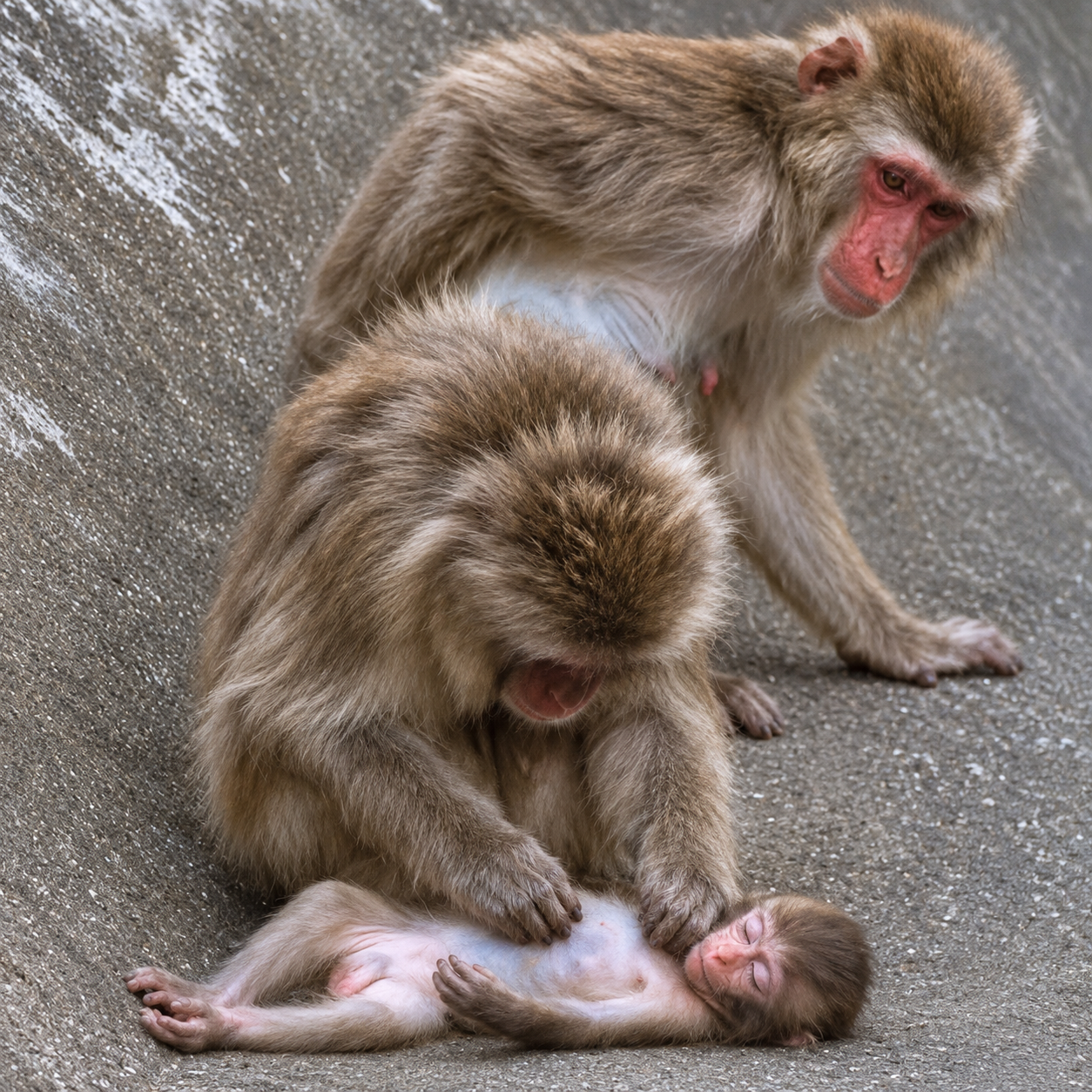
Grooming is one of the most recognizable social behaviors among Japanese macaques.
It involves carefully examining another individual’s fur using the hands and sometimes the mouth.
The activity can help remove dirt, loose material, and certain external parasites.
However, grooming is not simply a cleaning routine.
Among primates, it also plays an important role in maintaining social relationships.
Familiar individuals may spend considerable time grooming one another during quieter periods.
The behavior can occur while one animal remains seated or rests comfortably.
Young macaques gradually become familiar with grooming as part of ordinary troop life.
For viewers, gentle grooming near a resting youngster creates an especially tender impression.
The scene may resemble a miniature spa session, although the monkeys are simply displaying natural behavior.
And watching those careful movements makes the encounter even more fascinating.
Why Baby Monkeys Need Plenty of Rest
Baby monkeys spend considerable energy growing and learning about their surroundings.
Their developing bodies require appropriate nutrition, sleep, and opportunities for physical activity.
Rest supports important biological processes associated with normal growth and development.
Young animals also need time to recover after periods of energetic exploration.
As Japanese macaques mature, they become increasingly interested in climbing and social play.
These activities help develop muscular strength, coordination, and behavioral flexibility.
However, constant activity would not provide an appropriate balance for a developing youngster.
Quiet moments are therefore an important part of everyday life.
A comfortable resting place allows a young macaque to pause between more demanding activities.
For viewers, these ordinary biological needs produce some of the most adorable animal moments imaginable.
This Little Monkey Looks Like a Tiny Sleeping Angel!
The phrase sleeping angel perfectly captures the affectionate feeling this peaceful scene inspires.
A tiny macaque resting with its eyes closed can look incredibly innocent.
Its fluffy coat creates a soft appearance that makes the youngster especially endearing.
The relaxed positioning of its little limbs adds to the charm.
For many viewers, the moment brings back memories of watching a young child fall asleep.
There is something naturally appealing about seeing a vulnerable animal resting quietly.
The scene encourages people to appreciate beauty without dramatic action or unexpected surprises.
However, the youngster’s adorable appearance should not be confused with proof of human-like emotions.
Japanese macaques experience their environment through their own biological and social systems.
Their natural behavior is remarkable enough without inventing additional feelings.
And that makes this peaceful moment genuinely special.
The Fascinating World of Japanese Baby Monkeys
Japanese macaques are native to Japan and are sometimes called snow monkeys.
They are known for their thick fur, expressive faces, and remarkable ability to live in varied environments.
Their natural habitats include forests and mountainous regions with changing seasonal conditions.
Newborn macaques depend heavily on maternal care during their earliest stages of development.
They naturally cling to their mothers for physical support and close contact.
As they grow, youngsters gradually become more interested in exploring nearby surroundings.
Their social experiences expand through interactions with familiar adults and other juveniles.
They learn important skills through observation, practice, and repeated encounters.
Resting, grooming, and playful movement all contribute to ordinary macaque life.
Understanding these behaviors helps viewers appreciate the significance of everyday moments.
Even a simple afternoon nap can reveal something interesting about how young primates develop.
Why the Presence of Older Monkeys Matters
Japanese macaques live within social groups that contain individuals of different ages.
Adult females typically maintain important long-term relationships within their social communities.
Youngsters become familiar with other group members through repeated contact.
These interactions provide opportunities to learn social signals and acceptable behavior.
An older monkey may tolerate a youngster resting close to its body.
Another individual may approach to groom or investigate the youngster.
Different encounters can have different meanings depending on familiarity and social position.
However, proximity alone does not establish that a particular adult is the youngster’s mother.
Similarly, a nearby macaque should not automatically be described as a protective guardian.
The most reliable interpretation comes from observing the animals over time.
For viewers, peaceful interactions remain heartwarming even without knowing every family relationship.
From Playful Adventures to Peaceful Afternoon Naps
Young Japanese macaques are often associated with energetic and mischievous behavior.
They chase companions, investigate unfamiliar objects, and practice climbing across different surfaces.
Their playful activities can produce hilarious moments that entertain viewers around the world.
However, these exciting scenes represent only one part of daily macaque life.
Quiet periods are equally important for understanding the animals’ routines.
A youngster may spend one moment exploring and another relaxing comfortably.
Nearby companions may also change their behavior throughout the day.
Some monkeys prefer resting while others continue moving around the enclosure.
These contrasting activity levels create a fascinating balance between excitement and tranquility.
For animal lovers, a peaceful nap offers a refreshing change from more dramatic adventures.
Sometimes the quietest moments become the most memorable.
Why Watching Sleeping Baby Animals Feels So Heartwarming
People often respond strongly to the rounded features and small proportions of young animals.
Large-looking eyes, soft fur, and delicate movements can trigger affectionate reactions.
A resting baby monkey combines these recognizable features with an especially peaceful expression.
The result is a scene that many viewers find almost impossible to resist.
There is also something emotionally comforting about observing an animal during a quiet moment.
The absence of obvious conflict creates a gentle and relaxing atmosphere.
Nearby social contact can make the scene feel even more reassuring.
For supporters of famous Japanese macaques such as Punch-kun, peaceful encounters may carry additional meaning.
Many fans have followed emotional stories about vulnerable youngsters learning to participate in troop life.
Watching macaques rest near familiar companions can therefore feel particularly special.
These reactions reveal how strongly people connect with the everyday lives of animals.
What Can We Learn From This Adorable Sleeping Moment?
The peaceful behavior of a young macaque offers opportunities to understand normal primate development.
Rest is a natural part of life rather than simply a pause between interesting activities.
Youngsters need comfortable environments where they can alternate between exploration and recovery.
They also benefit from appropriate opportunities for social experience.
Grooming and peaceful proximity can contribute to the development of familiar relationships.
However, individual encounters should always be interpreted within their broader behavioral context.
A sleeping-looking youngster is not automatically frightened, exhausted, or emotionally overwhelmed.
Likewise, an older monkey approaching it is not necessarily providing human-style parental comfort.
Careful observation allows viewers to appreciate what the animals are actually doing.
The greatest lesson is that ordinary behavior can be just as fascinating as dramatic moments.
The Importance of Care and Animal Welfare
Providing a suitable environment is essential for the welfare of Japanese macaques living in zoos.
Professional caregivers must consider nutrition, physical health, social opportunities, and environmental conditions.
Young animals also need appropriate spaces for rest and exploration.
Comfortable resting locations allow individuals to choose where they spend quiet periods.
Climbing structures provide opportunities for movement and physical development.
Social interactions must be managed with an understanding of natural macaque behavior.
Caregivers also need to recognize when an animal requires additional observation or support.
For visitors, responsible viewing means respecting the animals’ space and avoiding unnecessary disturbance.
A peaceful resting youngster should not be encouraged to wake up for entertainment.
The most meaningful animal encounters are those that allow natural behavior to continue undisturbed.
Why This Baby Monkey Moment Is Worth Watching
Not every unforgettable animal video needs dramatic surprises or exciting action.
Sometimes the most beautiful story unfolds through small and peaceful details.
A resting youngster, a gentle movement, and nearby companions can create a memorable encounter.
Viewers naturally become curious about how the little macaque responds to its surroundings.
Will the youngster continue resting comfortably?
Could a nearby monkey begin another grooming interaction?
Or might the peaceful afternoon eventually turn into a playful adventure?
These questions make the complete recording worth exploring.
Watching a longer sequence also helps viewers understand the behavior more accurately.
Rather than relying on one brief moment, the full context may reveal how the encounter develops.
And the simple charm of a tiny resting monkey makes the experience especially enjoyable.
Frequently Asked Questions About Sleeping Baby Monkeys
Why Do Baby Monkeys Look So Adorable When They Sleep?
Baby monkeys have small bodies, soft fur, and delicate facial features that many viewers find especially endearing.
Their peaceful resting expressions can make these natural characteristics even more noticeable.
Do Japanese Baby Monkeys Sleep During the Day?
Young Japanese macaques may rest during daylight hours between periods of exploration and social activity.
Their daily routines vary according to age, environmental conditions, and individual needs.
Why Do Older Monkeys Groom Baby Monkeys?
Grooming can help maintain fur condition and contribute to social relationships.
Its precise meaning depends on the individuals involved and the circumstances of the encounter.
Does Grooming Mean the Older Monkey Is the Mother?
Grooming alone cannot confirm a biological relationship between two macaques.
Japanese macaques may groom familiar individuals who are not their offspring.
Why Do Baby Monkeys Rest Near Adults?
Young macaques often spend time near familiar group members as part of their normal social development.
However, individual resting preferences can vary between animals and situations.
Are Japanese Macaques Also Called Snow Monkeys?
Japanese macaques are commonly known as snow monkeys because some populations live in snowy environments.
However, they also inhabit areas of Japan with much milder climates.
How Can Viewers Tell Whether a Baby Monkey Is Really Sleeping?
Closed eyes and a still posture may suggest rest, but they do not always establish deep sleep.
Observing the animal over time provides more information about its behavior.
Where Can People Learn More About Japanese Macaque Behavior?
Professional zoo education, scientific research, and careful observation can provide valuable information about macaque life.
Watching complete behavioral sequences is especially useful for understanding interactions between different individuals.
The Sweetest Little Nap Reminds Us to Appreciate Simple Moments
The natural world is filled with unforgettable experiences that do not require excitement or drama.
Sometimes a tiny baby monkey enjoying a peaceful rest is enough to brighten an entire day.
Its delicate appearance and relaxed posture create a moment of extraordinary charm.
The presence of nearby companions adds another layer of tenderness to the story.
For viewers, the encounter becomes a beautiful reminder of the importance of rest and social connection.
Young Japanese macaques have much to learn as they grow and explore their surroundings.
Their daily lives involve energetic activities, quiet recovery, and complicated social experiences.
Every peaceful moment offers another opportunity to appreciate their fascinating behavior.
And while the sleeping angel comparison is an affectionate human expression, the youngster’s natural beauty needs no exaggeration.
Sometimes the cutest animal story is simply about a little monkey enjoying a well-deserved nap.
Watch the Full Video: The Cutest Baby Monkey Ever!
What happens when an adorable baby monkey settles into a peaceful resting position?
How do nearby macaques respond to the little youngster during this gentle encounter?
And could this be one of the most heartwarming monkey moments you will see today?
Discover more about these adorable animals and enjoy the peaceful world of Japanese macaques.